

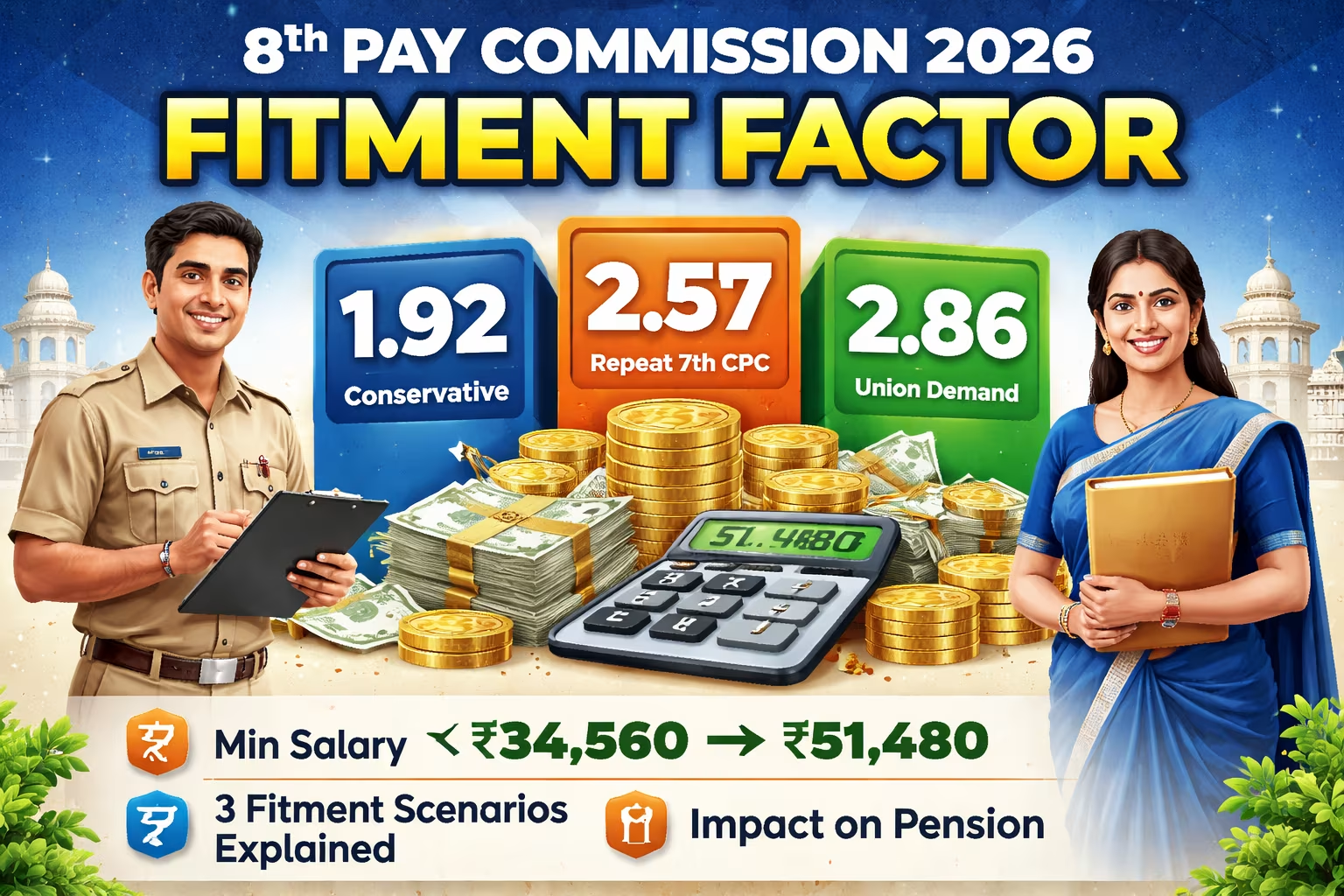
Key Facts: 8th CPC Fitment Factor 2026
- 7th CPC Fitment Factor (2016): 2.57 (uniform for all levels)
- 8th CPC Projected Range: 1.92 to 2.86 (not yet confirmed)
- Union Demand: Minimum 2.86
- Government’s Fiscal Preference: 1.92 to 2.08 (analyst estimate)
- DA at Implementation: ~60% (to be merged into new basic pay)
- Official Announcement: Expected after report submission in late 2026
If you have heard about the 8th Pay Commission and want to know what it actually means for your salary, you are in the right place.
One number determines everything — your new basic pay, your HRA, your TA, your arrears, and even your pension. That number is called the Fitment Factor. Right now, three figures are being discussed most heavily: 1.92, 2.57, and 2.86. Each one leads to a completely different salary outcome for lakhs of central government employees.
This post explains what the fitment factor is, how it is decided, what each scenario means for your pocket, and which one experts consider most likely.
1. What Is the Fitment Factor? (Simple Explanation)
The fitment factor is a single multiplier number that the Pay Commission applies to your current 7th CPC basic pay to arrive at your new 8th CPC basic pay.
Formula
New Basic Pay = Current Basic Pay × Fitment Factor
Real example from 7th CPC (2016):
Old basic pay of ₹7,000 × fitment factor 2.57 = New basic pay of ₹18,000
Every other benefit — HRA, TA, pension, gratuity, and arrears — is calculated on top of this new basic pay. This is why the fitment factor is the most important number in the entire pay revision exercise.
2. How Is the Fitment Factor Decided?
The Pay Commission does not pick the fitment factor randomly. It is calculated using a combination of the following factors:
- Accumulated Dearness Allowance (DA): The most critical anchor. When DA is high, a minimum fitment factor is automatically set to absorb it. With DA expected at 60% from January 2026, the floor for the 8th CPC fitment factor is at least 1.60.
- Inflation (Consumer Price Index): Rising prices over the past 10 years demand higher compensation.
- Government’s Fiscal Capacity: The government must balance salary costs against the budget. A high fitment factor means higher expenditure across all ministries and departments.
- Employee Union Demands: Unions formally submit their desired fitment factor to the Commission during the consultation phase.
- Economic Conditions: GDP growth rate and government revenue projections heavily influence what the government can afford.
Historical Fitment Factor Trend
| Pay Commission | Year | Fitment Factor | DA at Time | Min Basic Pay (Before) | Min Basic Pay (After) |
|---|---|---|---|---|---|
| 5th CPC | 1997 | ~1.40 | ~148% | ₹750 | ₹2,550 |
| 6th CPC | 2006 | 1.86 | ~24% | ₹2,550 | ₹6,660 |
| 7th CPC | 2016 | 2.57 | ~125% | ₹7,000 | ₹18,000 |
| 8th CPC | 2026 | 1.92–2.86 (projected) | ~60% | ₹18,000 | ₹34,560–₹51,480 |
3. The Three Scenarios Explained
Scenario A — Fitment Factor 1.92 (Conservative / Government Preference)
This is the scenario analysts believe the government is leaning toward, based on its fiscal position and the fact that DA at 60% already provides significant relief. A fitment factor of 1.92 means a 92% increase over your current basic pay.
| Pay Level | Current Basic Pay | New Basic Pay @ 1.92 | Monthly Increase |
|---|---|---|---|
| Level 1 | ₹18,000 | ₹34,560 | +₹16,560 |
| Level 2 | ₹19,900 | ₹38,208 | +₹18,308 |
| Level 4 | ₹25,500 | ₹48,960 | +₹23,460 |
| Level 6 | ₹35,400 | ₹67,968 | +₹32,568 |
| Level 7 | ₹44,900 | ₹86,208 | +₹41,308 |
| Level 10 | ₹56,100 | ₹1,07,712 | +₹51,612 |
Scenario B — Fitment Factor 2.57 (Same as 7th CPC)
Some experts suggest the 8th CPC may simply repeat the 7th CPC’s 2.57 fitment factor, since the underlying DA situation is comparable. This would be seen as a safe, precedent-based decision that is easy for the government to defend.
| Pay Level | Current Basic Pay | New Basic Pay @ 2.57 | Monthly Increase |
|---|---|---|---|
| Level 1 | ₹18,000 | ₹46,260 | +₹28,260 |
| Level 2 | ₹19,900 | ₹51,143 | +₹31,243 |
| Level 4 | ₹25,500 | ₹65,535 | +₹40,035 |
| Level 6 | ₹35,400 | ₹90,978 | +₹55,578 |
| Level 7 | ₹44,900 | ₹1,15,393 | +₹70,493 |
| Level 10 | ₹56,100 | ₹1,44,177 | +₹88,077 |
Scenario C — Fitment Factor 2.86 (Union Demand / Optimistic)
This is the number that employee unions — including the National Council of JCM — are formally demanding. If granted, it would be the largest salary hike in Pay Commission history in percentage terms. Minimum basic pay would jump from ₹18,000 to ₹51,480.
| Pay Level | Current Basic Pay | New Basic Pay @ 2.86 | Monthly Increase |
|---|---|---|---|
| Level 1 | ₹18,000 | ₹51,480 | +₹33,480 |
| Level 2 | ₹19,900 | ₹56,914 | +₹37,014 |
| Level 4 | ₹25,500 | ₹72,930 | +₹47,430 |
| Level 6 | ₹35,400 | ₹1,01,244 | +₹65,844 |
| Level 7 | ₹44,900 | ₹1,28,414 | +₹83,514 |
| Level 10 | ₹56,100 | ₹1,60,446 | +₹1,04,346 |
4. All Three Scenarios Side by Side (Level 1 to Level 7)
| Pay Level | Current Basic | @ 1.92 | @ 2.57 | @ 2.86 |
|---|---|---|---|---|
| Level 1 | ₹18,000 | ₹34,560 | ₹46,260 | ₹51,480 |
| Level 2 | ₹19,900 | ₹38,208 | ₹51,143 | ₹56,914 |
| Level 3 | ₹21,700 | ₹41,664 | ₹55,769 | ₹62,062 |
| Level 4 | ₹25,500 | ₹48,960 | ₹65,535 | ₹72,930 |
| Level 5 | ₹29,200 | ₹56,064 | ₹75,044 | ₹83,512 |
| Level 6 | ₹35,400 | ₹67,968 | ₹90,978 | ₹1,01,244 |
| Level 7 | ₹44,900 | ₹86,208 | ₹1,15,393 | ₹1,28,414 |
5. Impact on Pension
Pension for central government retirees is calculated as 50% of the last drawn basic pay. This means the fitment factor directly doubles the pension impact. Here is what pensioners can expect under each scenario:
| Current Pension | New Pension @ 1.92 | New Pension @ 2.57 | New Pension @ 2.86 |
|---|---|---|---|
| ₹9,000 (minimum) | ₹17,280 | ₹23,130 | ₹25,740 |
| ₹15,000 | ₹28,800 | ₹38,550 | ₹42,900 |
| ₹25,000 | ₹48,000 | ₹64,250 | ₹71,500 |
| ₹40,000 | ₹76,800 | ₹1,02,800 | ₹1,14,400 |
6. Which Fitment Factor Is Most Likely?
Based on past trends, analyst projections, and the government’s budget position, here is an honest assessment:
The government’s fiscal space is constrained. Combined salary and pension outgo at 2.86 would inject over ₹3 lakh crore into the economy — a significant burden. Past commissions also show that the government rarely accepts union demands in full. A fitment factor between 1.92 and 2.28 balances employee expectations with budgetary reality.
While 2.57 is possible as a repeat of the 7th CPC, the government would need strong economic tailwinds to justify it. A factor of 2.86 — though the most popular demand — would require a combination of strong GDP growth and political will ahead of state elections.
What is the minimum salary after 8th Pay Commission?
The minimum basic pay is projected to be between ₹34,560 (at fitment factor 1.92) and ₹51,480 (at fitment factor 2.86). The current minimum basic pay under the 7th CPC is ₹18,000.
Will the fitment factor be the same for all levels?
Under the 7th Pay Commission, a single uniform fitment factor of 2.57 was applied to all pay levels. It is expected that the 8th Pay Commission may follow a similar uniform approach, though the Commission may also consider different multipliers for different levels. No decision has been announced yet.
When will the fitment factor be officially announced?
The fitment factor will be officially announced only after the 8th Pay Commission submits its final report to the government, which is expected in late 2026, and after the Union Cabinet formally accepts the recommendations.
Does the fitment factor apply to pensioners too?
Yes. The fitment factor is applied to the basic pension of existing pensioners to arrive at their revised pension under the 8th Pay Commission. Pensioners who retired under the 7th CPC will have their pensions revised accordingly once the commission is implemented.
What happens to DA after the fitment factor is applied?
Once the new fitment factor-based pay is implemented, DA resets to zero. The accumulated DA (expected at 60%) is effectively absorbed into the new basic pay through the fitment factor. Future DA hikes will begin fresh from 0% based on new CPI data.
हिंदी सारांश: 8वां वेतन आयोग फिटमेंट फैक्टर 2026
फिटमेंट फैक्टर वह गुणक है जिससे आपकी वर्तमान बेसिक सैलरी को गुणा करके नई सैलरी तय होती है। 7वें वेतन आयोग में यह 2.57 था। 8वें वेतन आयोग में तीन संभावित परिदृश्य हैं: 1.92 (सरकारी अनुमान), 2.57 (7वें CPC के बराबर), और 2.86 (कर्मचारी संघों की मांग)। फिटमेंट फैक्टर 2.86 लागू होने पर न्यूनतम बेसिक वेतन ₹18,000 से बढ़कर ₹51,480 हो जाएगा। आधिकारिक घोषणा 2026 के अंत में आयोग की रिपोर्ट के बाद होगी।
WhatsApp Share


