

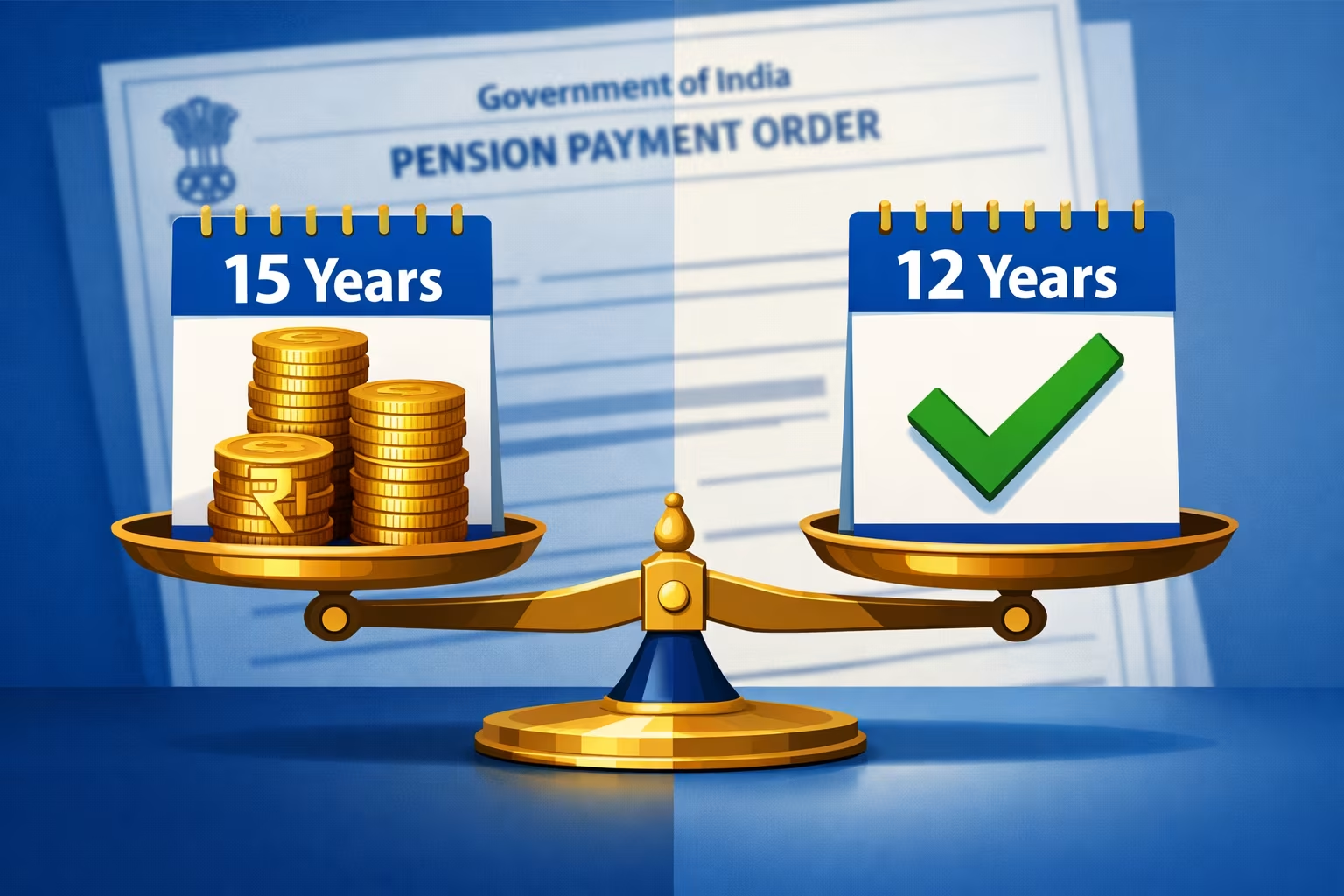
Quick Summary: Central Government Pensioners are aggressively demanding a reduction in the “Commutation Restoration” period from the current 15 years to 12 years. The argument is simple: with falling interest rates, the government recovers the entire commuted amount (plus interest) in just ~11 years. Why pay for 4 extra years?
- Lump Sum Taken: You sell 40% of your pension upfront.
- Restoration Time: You get full pension back after 15 years.
- The Reality: Mathematical analysis shows the loan is repaid fully in about 10.8 to 11 years. The remaining years are pure profit for the government.
The Math: Why “12 Years” is Fair
When you commute a part of your pension, it is essentially a loan from the government charged at an interest rate (historically around 8% reducing balance). However, mortality tables and interest rates have changed significantly since the rule was framed in 1981 (Supreme Court judgement).
The Breakeven Calculation
Let’s look at the numbers cited by Pensioner Associations to the 8th Pay Commission:
| Year of Recovery | Status of Principal + Interest |
|---|---|
| Year 1 to 10 | Principal Repayment Ongoing |
| Year 11 (approx) | 100% Recovery Completed |
| Year 12 to 15 | Excess Payment by Pensioner |
Historical Context: The 1987 Judgement
The 15-year rule comes from the landmark Supreme Court judgement in Common Cause vs. Union of India (1987). Back then, interest rates were high. Today, with interest rates hovering around 6-7%, the recovery happens much faster.
The Kerala & Gujarat High Court Angle: Several cases have been filed recently arguing that continuing deduction beyond full recovery violates Article 14 (Right to Equality). The 5th and 6th Pay Commissions acknowledged this but did not recommend a change due to “administrative complexities.”
Will 8th Pay Commission Accept This?
The demand to reduce restoration to 12 years (or even 10 years for super-seniors) is a priority item in the JCM Staff Side memorandum.
Arguments in Favor:
- Interest Rate Drop: Commutation value is calculated based on an 8% discount rate, but market rates are lower.
- Life Expectancy: Pensioners are living longer, but that doesn’t justify over-recovery of the loan.
Arguments Against (Government View):
- Risk Pooling: Commutation is based on a “pool of pensioners.” Some die early (before repaying), so those who live longer subsidize the loss.
What Should You Do?
Currently, no official order has been passed to reduce the period. Pensioners must continue to track their 15-year completion date for automatic restoration.
If you are nearing retirement, use our calculators to understand your cash flow.
👉 Related: Check Railway Pension Rules & Retirement Benefits


